
Rexel USA: Overcoming Systemic Debt
Strategic focus:
Design System implementation & future-state vision
Domain expertise:
International B2B E-commerce & Electrical Supply
Project duration:
12-Month system rollout & global concept development
Platform scope:
U.S. & International E-commerce Sites
Project Overview: Scaling Quality & Global Vision
The Challenge: Design Debt and Fragmented Ecosystems
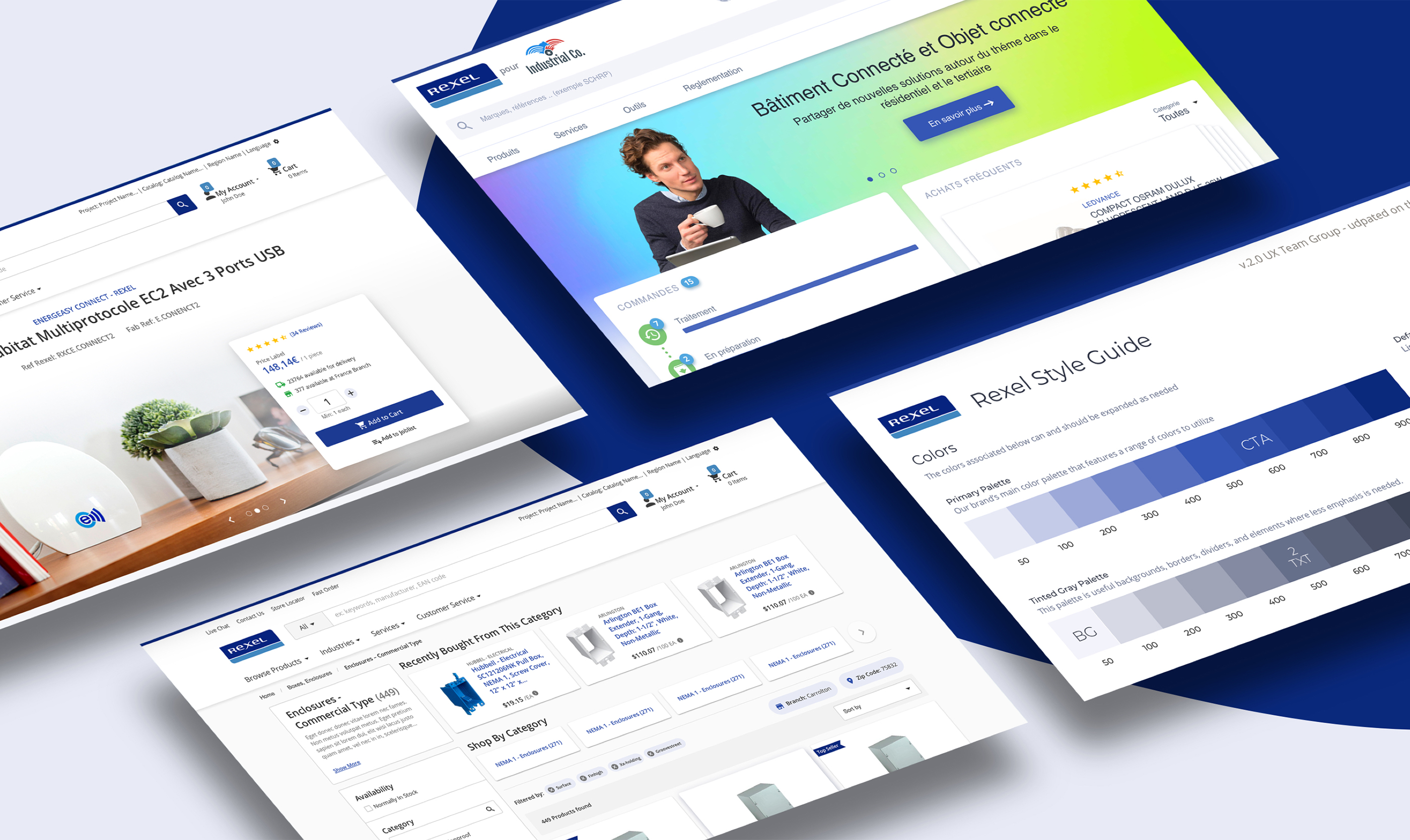
The Rexel USA e-commerce platform was facing a critical decline in operational efficiency due to significant design debt and a lack of component standardization. This inconsistency slowed feature velocity and hindered the organization's ability to meet strategic B2B goals across its US and international platforms. My mandate as a Senior UX Designer was to architect a unified Design System and lead high-impact redesigns that would move the needle on conversion while aligning with global product strategy.
My Strategic Role
As the lead strategic individual contributor for a 12-month rollout, I operated at the intersection of US engineering and Global (Paris) product leadership. My responsibilities spanned from technical UI auditing to high-visibility conceptual design for international trade shows. I acted as the bridge between abstract business goals and a tangible, scalable design language that could serve Rexel’s global B2B constituents.
The Three Pillars of Innovation
- Foundational Quality: Architecting and implementing a Design System as the single source of truth to reduce redundant code and ensure WCAG accessibility.
- Conversion Optimization: Leading the conceptual redesign of the high-traffic Product Listing Page (PLP) to improve B2B product discoverability.
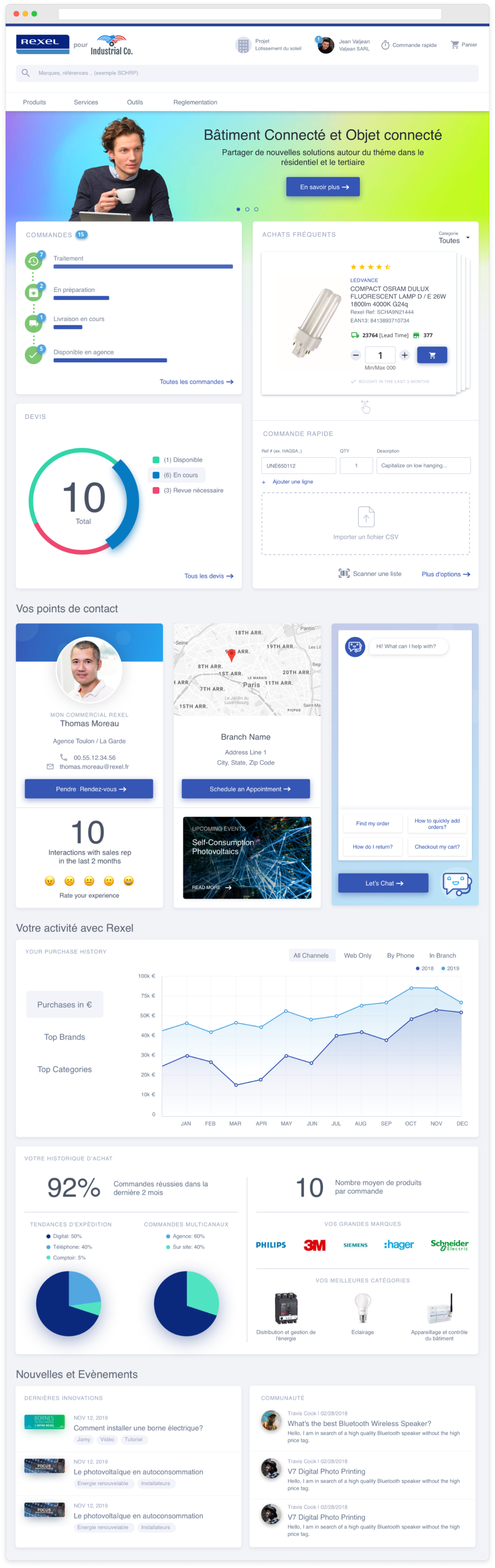
- Future-State Vision: Partnering with Global Product Owners in Paris to design an innovative Homepage Dashboard for thousands of international stakeholders.

Exploration & Discovery: Quantifying Design Debt
The UI/UX Audit: Identifying Fragmentation
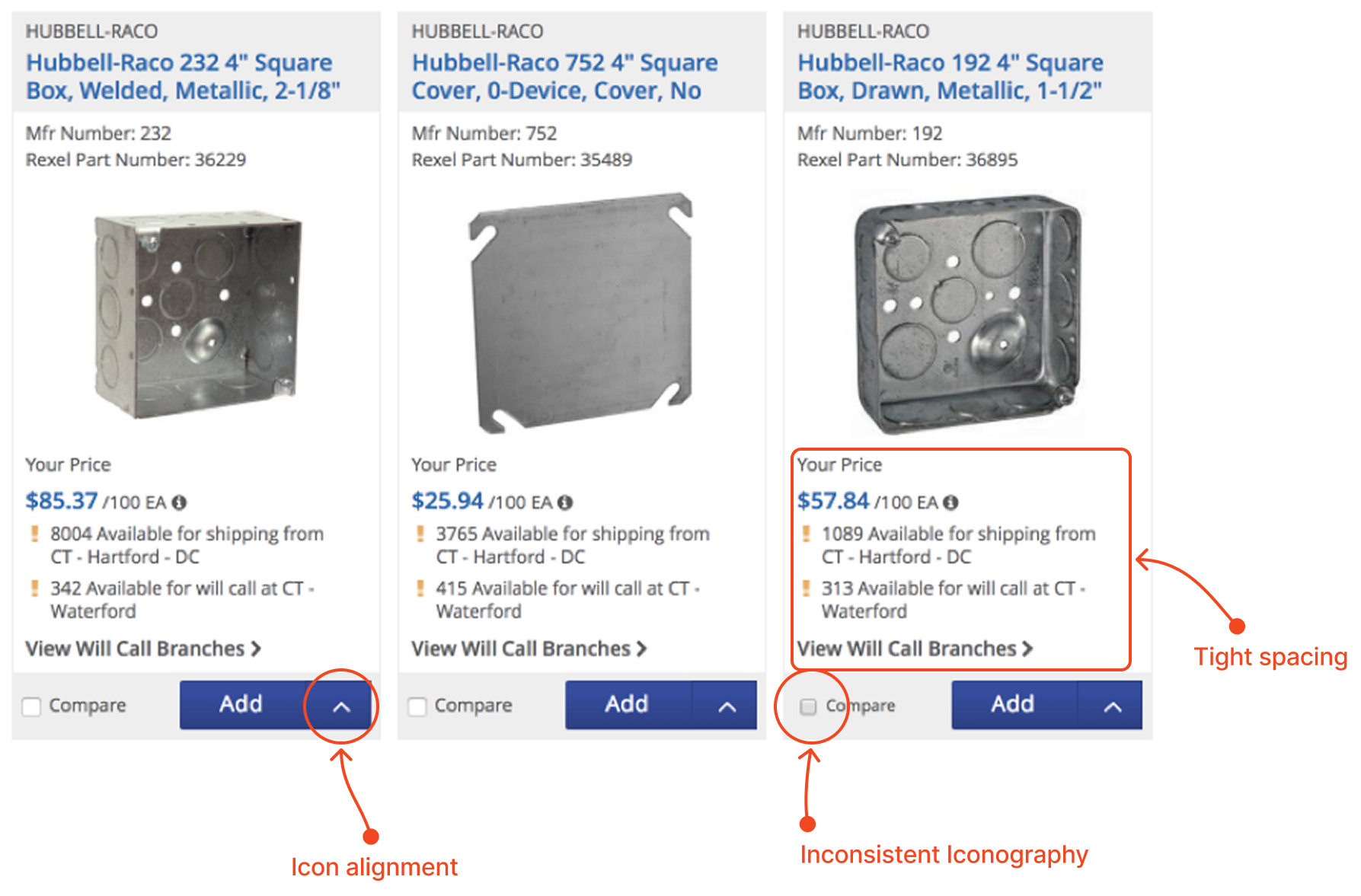
To move beyond subjective design opinions, I initiated a comprehensive UI/UX Audit across all existing U.S. platforms. I documented hundreds of inconsistencies in core components—ranging from a dozen different button styles to fragmented typography and spacing patterns. This audit served as the primary evidence to prove that the current "high-velocity" workflow was actually creating a bottleneck, as engineering teams were forced to rewrite styling for nearly every new feature.
Stakeholder Alignment & Requirement Gathering
Scaling a Design System requires more than just pixels; it requires a governance model. I facilitated workshops with both U.S. and International product owners to define a contribution model that would allow the system to remain flexible while serving as a "Single Source of Truth". We established that the system must not only solve visual debt but also enforce the organization’s first comprehensive set of WCAG 2.1 accessibility standards to mitigate legal risk and improve usability for all B2B customers.
Establishing the Logic: Design Tokens & Scalability
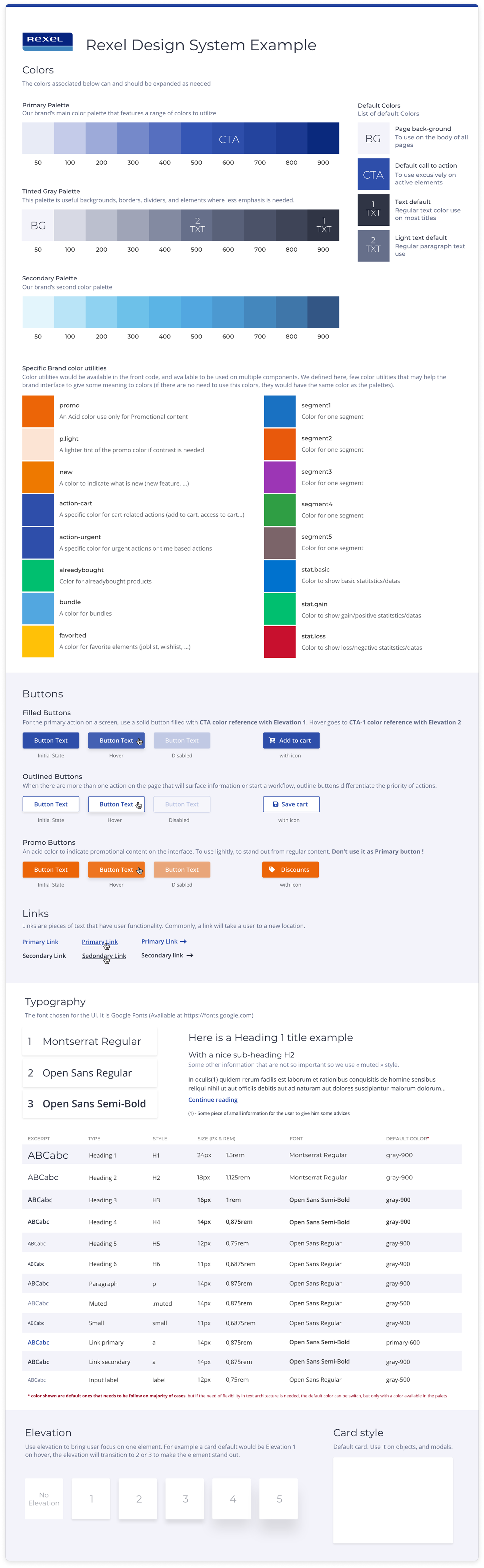
Instead of jumping straight to mockups, I spent this phase architecting the Design Token structure. I defined a foundational hierarchy for color, spacing, and typography that was brand-agnostic. This strategic decision ensured that while the initial rollout was for one specific brand, the entire system remained scalable to Rexel’s other proprietaries, allowing for a 60% reduction in future design debt.
UX Process: Systemic Governance & Global Alignment
To resolve the 60% design debt discovered during the audit, I designed a Governance and Contribution Model that transformed our library into a living, scalable ecosystem. I established a "Single Source of Truth" workflow—moving from localized project needs to global audits and engineering documentation—which resulted in a 40% reduction in front-end build time per sprint. This systemic approach allowed me to successfully bridge the gap between U.S. operations and global leadership in Paris, where I facilitated design sessions for the Innovation Dashboard. By prioritizing Information Architecture and technical logic for high-traffic pages like the PLP, I provided a validated structural blueprint that reduced the discovery phase for future e-commerce optimization sprints by weeks.
Design System: Governance & Contribution Flow

This work flow reduced front-end build time by 40% and ensured global design consistency
Strategic Impact: Quantified Efficiency & Global Maturity
Driving Operational Excellence
The implementation of the Rexel Design System and the strategic governance model transformed the organization’s digital output. By establishing a standardized component library, we achieved an estimated 40% reduction in Front-End build time per sprint. This allowed engineering teams to pivot from styling basic UI elements to building high-value business features, significantly increasing the overall velocity of the product roadmap.
Eliminating Debt & Ensuring Compliance
By unifying a fragmented B2B ecosystem into a single source of truth, I successfully reduced design debt by approximately 60%. Crucially, I established and enforced the organization’s first comprehensive set of WCAG 2.1 accessibility standards. This not only mitigated legal risk but ensured the platform was usable for the entire spectrum of Rexel’s B2B customer base, reflecting a newfound level of design maturity across U.S. and global platforms.
Global Vision & Accelerated Discovery
The Future Homepage Innovation Dashboard was showcased to thousands of international stakeholders in Paris, successfully aligning the U.S. product roadmap with global digital strategy. Additionally, the new Product Listing Page (PLP) architecture provided a validated blueprint that reduced the discovery and design phase for future e-commerce optimization sprints by weeks, ensuring Rexel could respond to market needs with unprecedented speed.
Reflections: Lessons in Systems Thinking
- Scalability over Speed: I learned that while "moving fast" is a goal, moving fast without a system creates debt that eventually halts progress.
- The Designer as a Bridge: This project solidified my ability to navigate complex stakeholder landscapes, proving that a Senior Designer's value often lies in facilitating consensus between technical teams and international leadership.