
Bringing Regulated Sales Online
CVS Health needed to expand regulated product sales online while balancing strict compliance with conversion goals.
Role
Manager, Product Designer
Domain
Regulated e-commerce
Timeline
9 months
Platform
Web & mobile
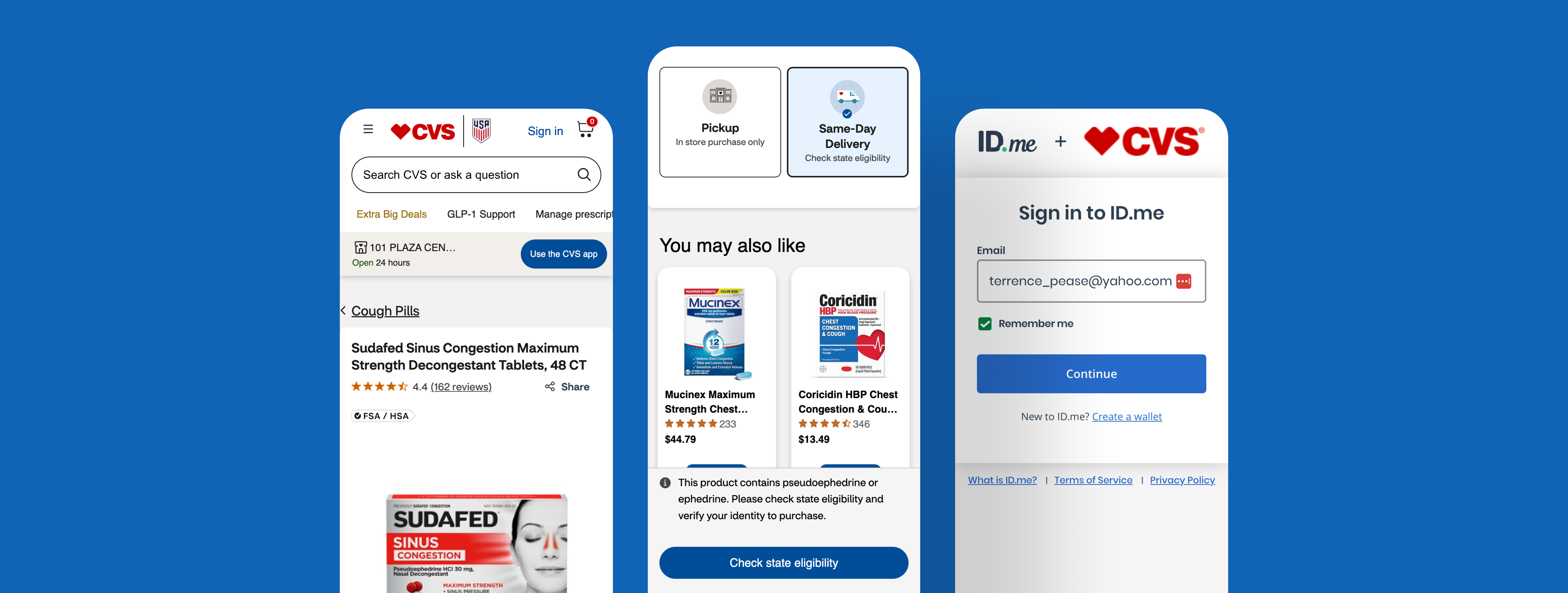
The Challenge
Expanding regulated products into digital channels meant introducing compliance friction that conflicted with customer conversion. Industry data shows 40–60% abandon purchases when facing unexpected friction—and CVS Health had zero digital channel for regulated sales.
The problem wasn't just enabling identity verification. It was creating a trustworthy experience that customers would complete, through a complex multi-step process.
The Breakthrough
Early discovery revealed a critical insight: Verification isn't a checkout problem, it's an eligibility problem. Traditional e-commerce patterns let customers build orders before identity verification, creating three risks:
- Wasted customer effort discovering ineligibility mid-purchase
- Increased abandonment and support costs
- Eroded trust at the critical conversion moment
My solution: Move eligibility validation upfront, before purchase. Customers only enter verification when actually eligible to complete a transaction.This reframe transformed a friction point into a confidence builder, aligning compliance with conversion.
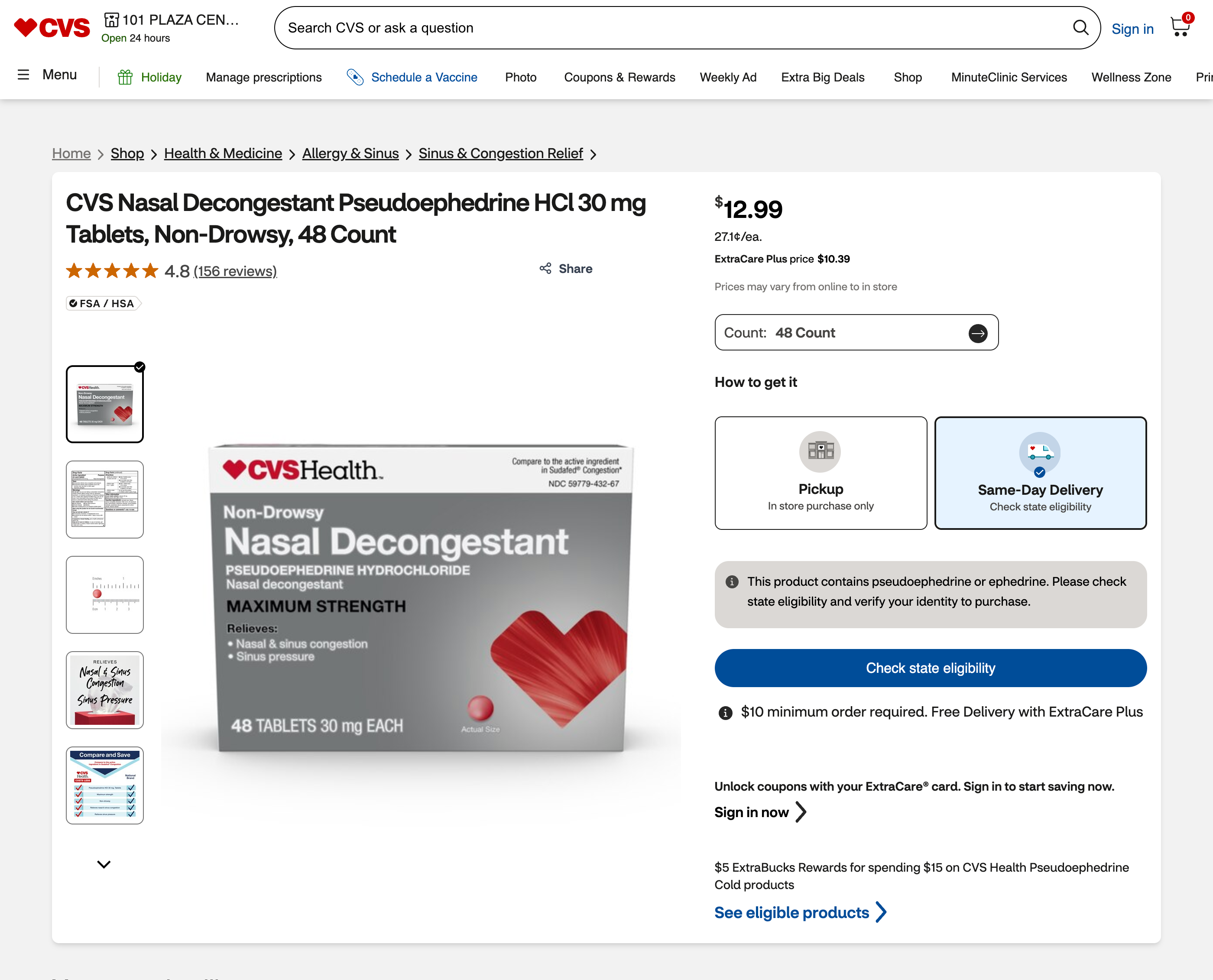
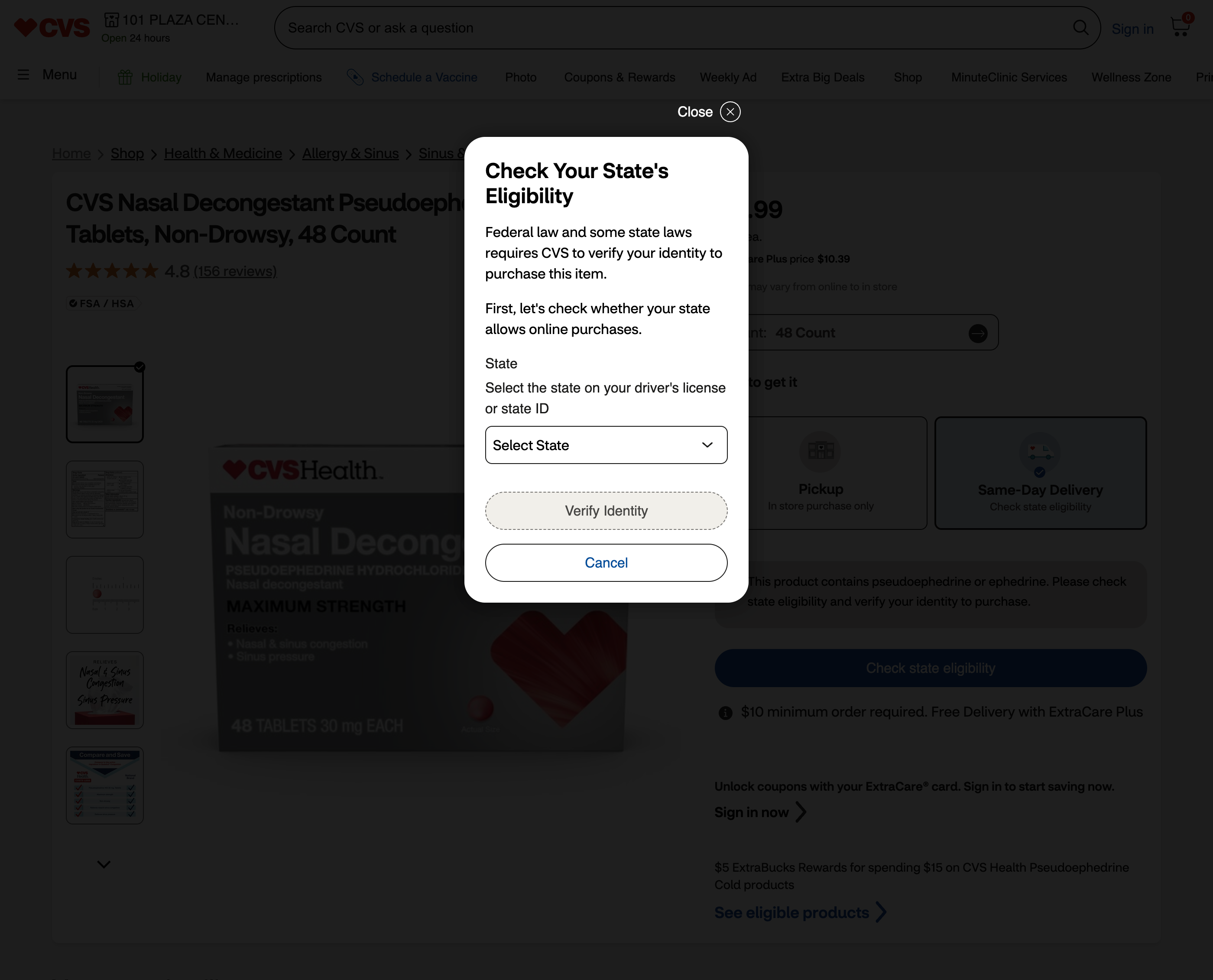
Translating Requirements Into Design
I led discovery workshops across Legal, Product, and Engineering to translate complex state-by-state regulations into a scalable framework.
We defined:
- State-level purchase limits and age verification rules
- Adaptable eligibility logic for future regulatory changes
- Recovery paths for technical failures (timeouts, interrupted sessions, expired auth)
Early documentation reduced implementation risk and created a reusable foundation.
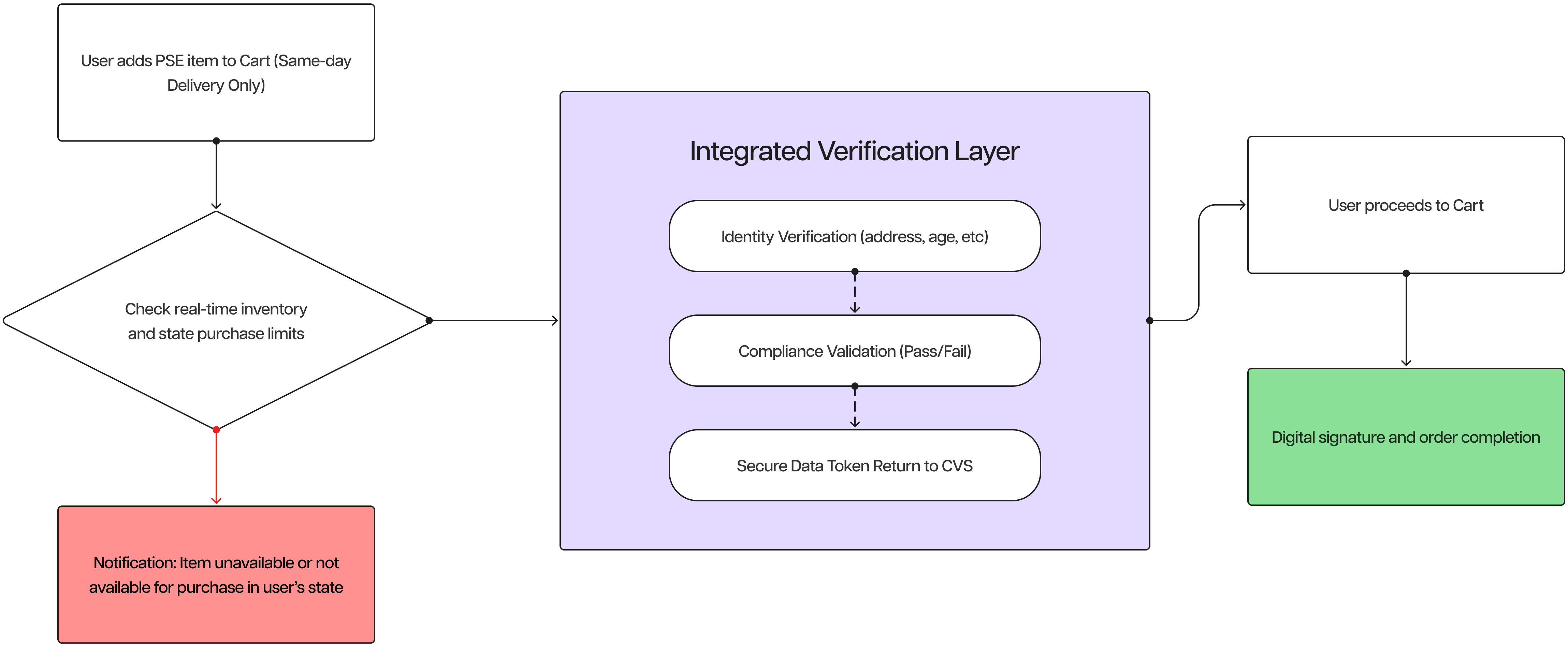
Building Trust at the Handoff
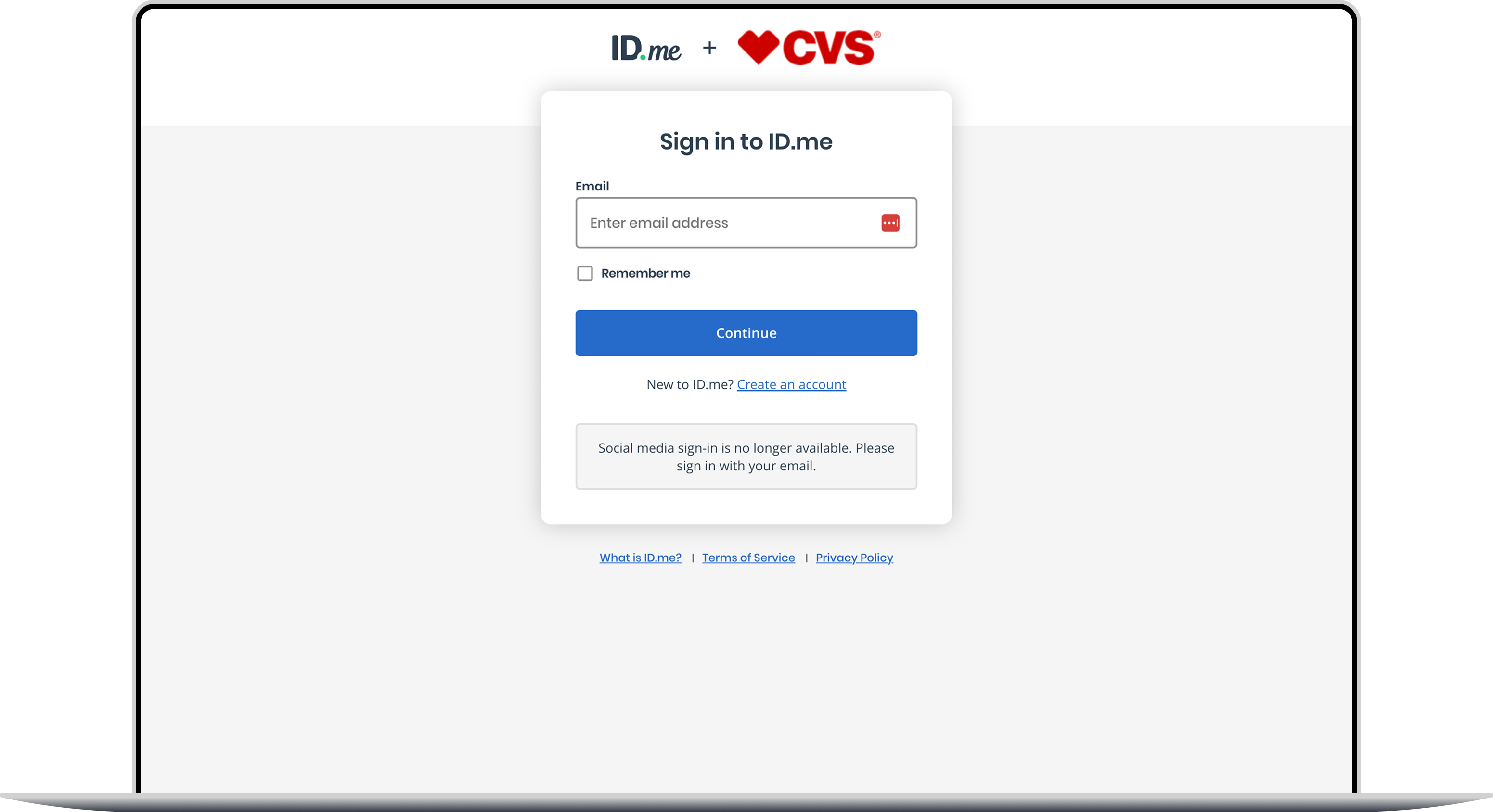
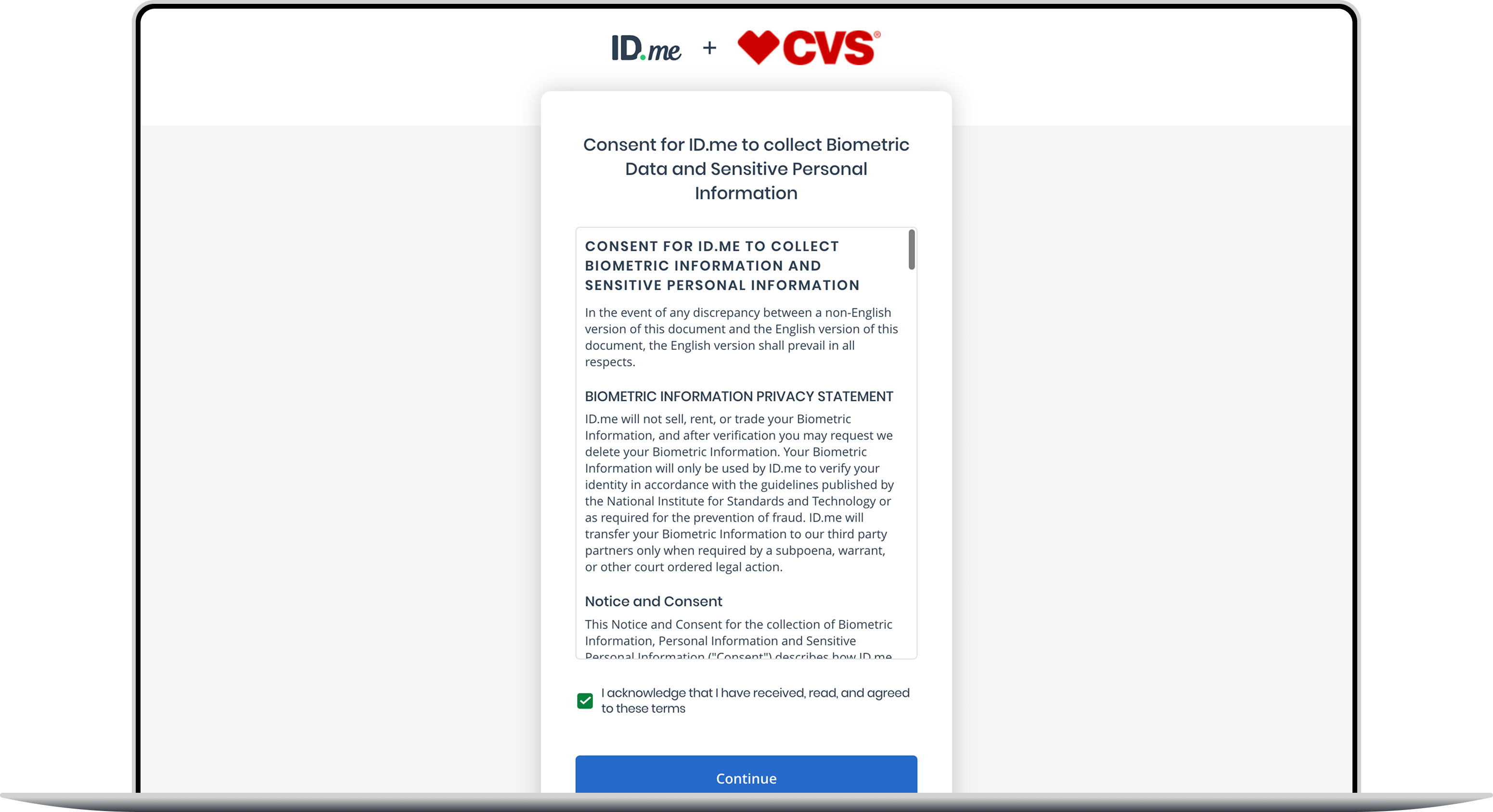
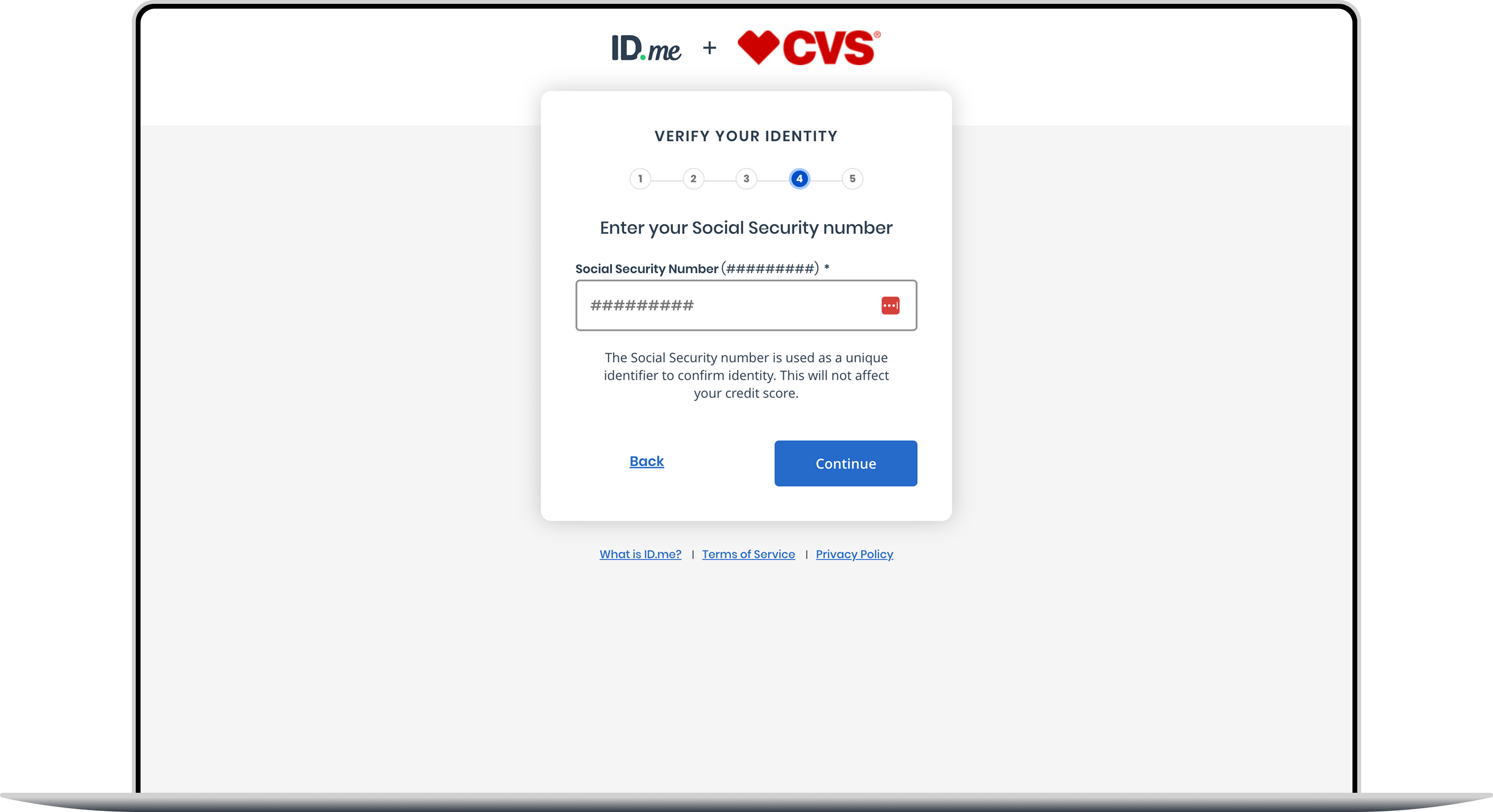
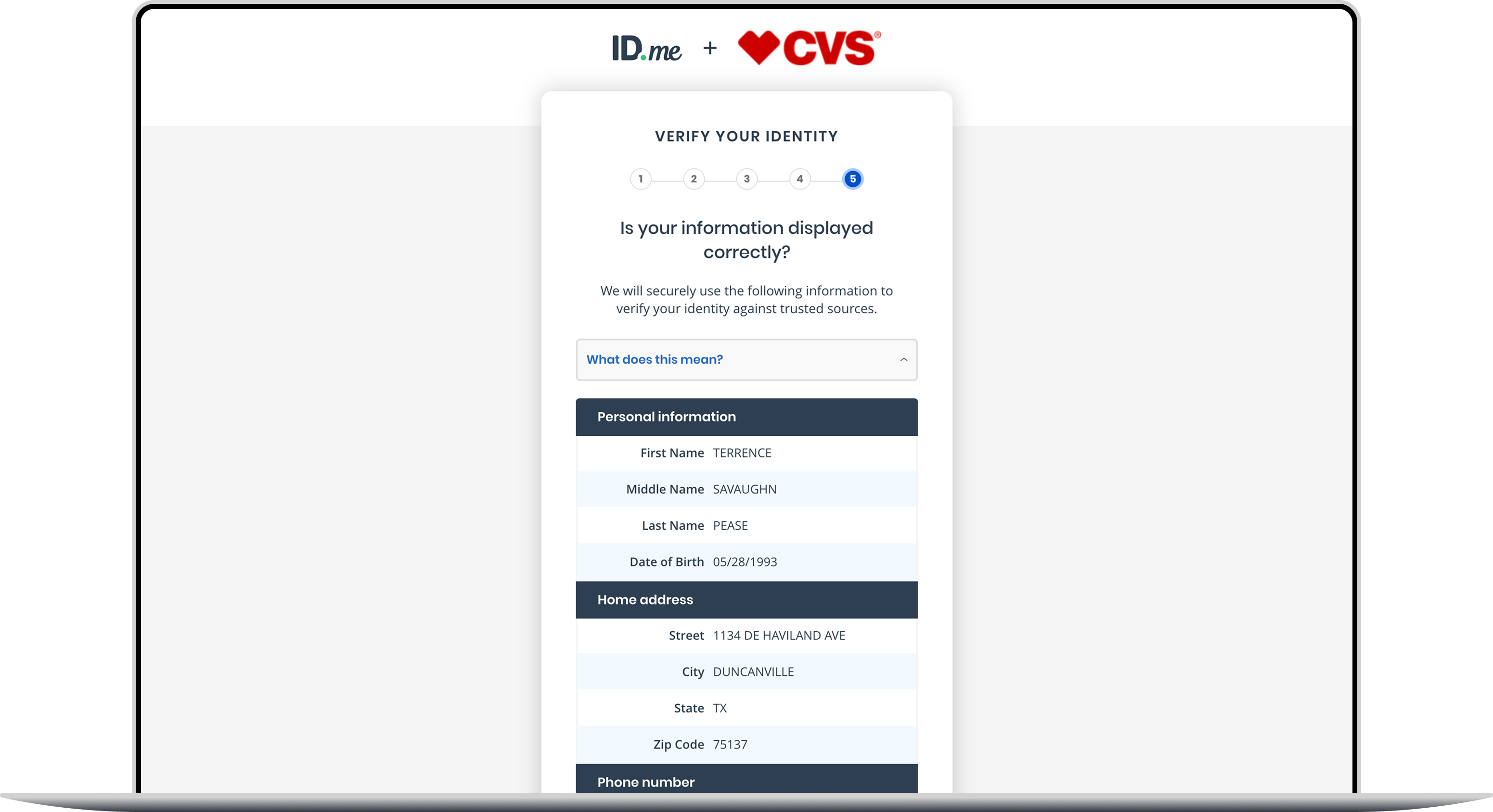
Competitive analysis showed customers lose confidence when redirected to third-party verification (ID.me). This creates uncertainty around security and legitimacy, increasing abandonment.
I established a co-branded trust framework that kept CVS Health's brand visible throughout verification. Consistent visual language, progress indicators, and contextual messaging reinforced legitimacy and reduced uncertainty.
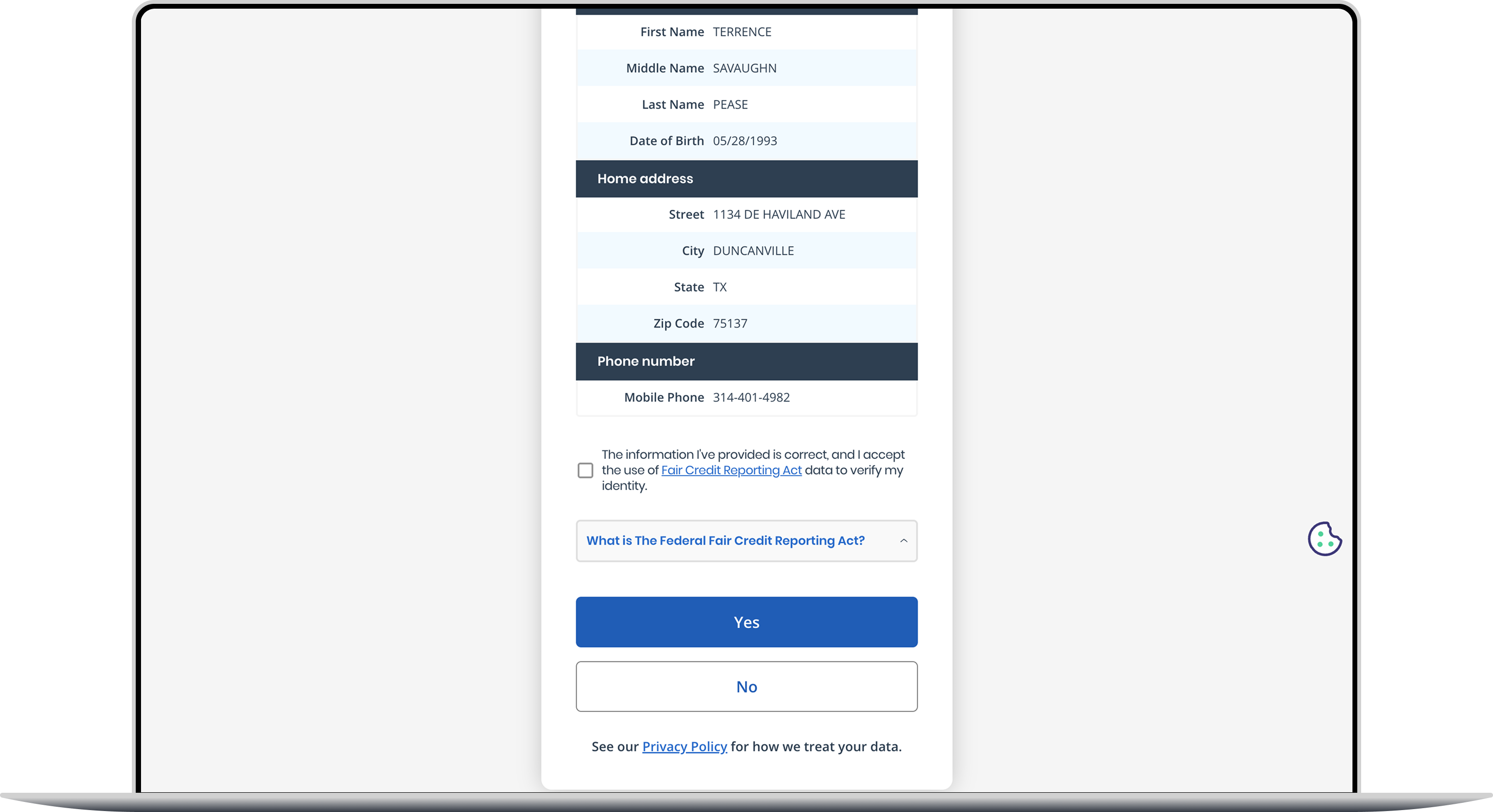
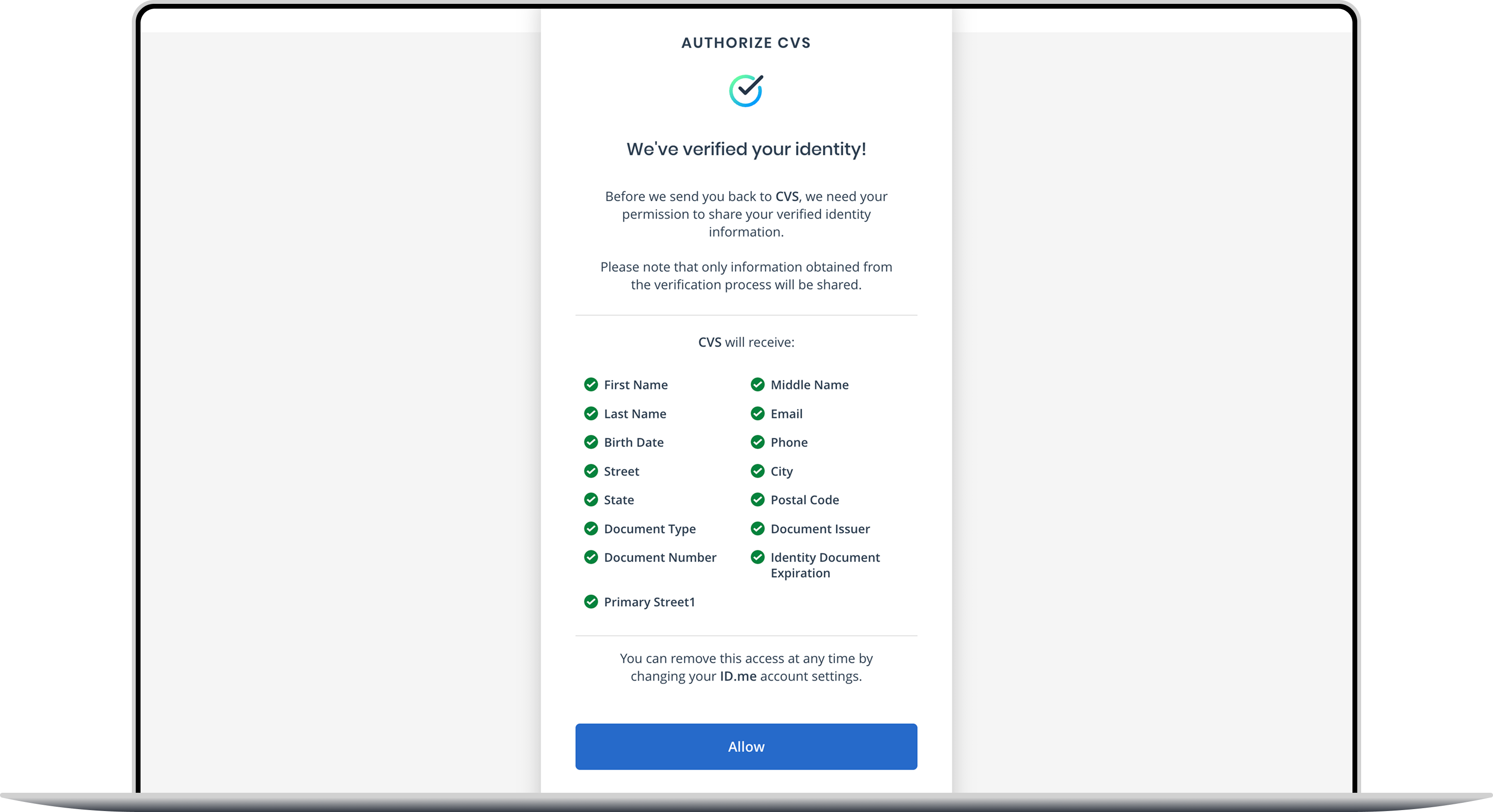


The Complete Journey
Once eligibility and identity were verified, the purchase flow was straightforward: add products to cart, confirm, sign for regulated items, and complete.
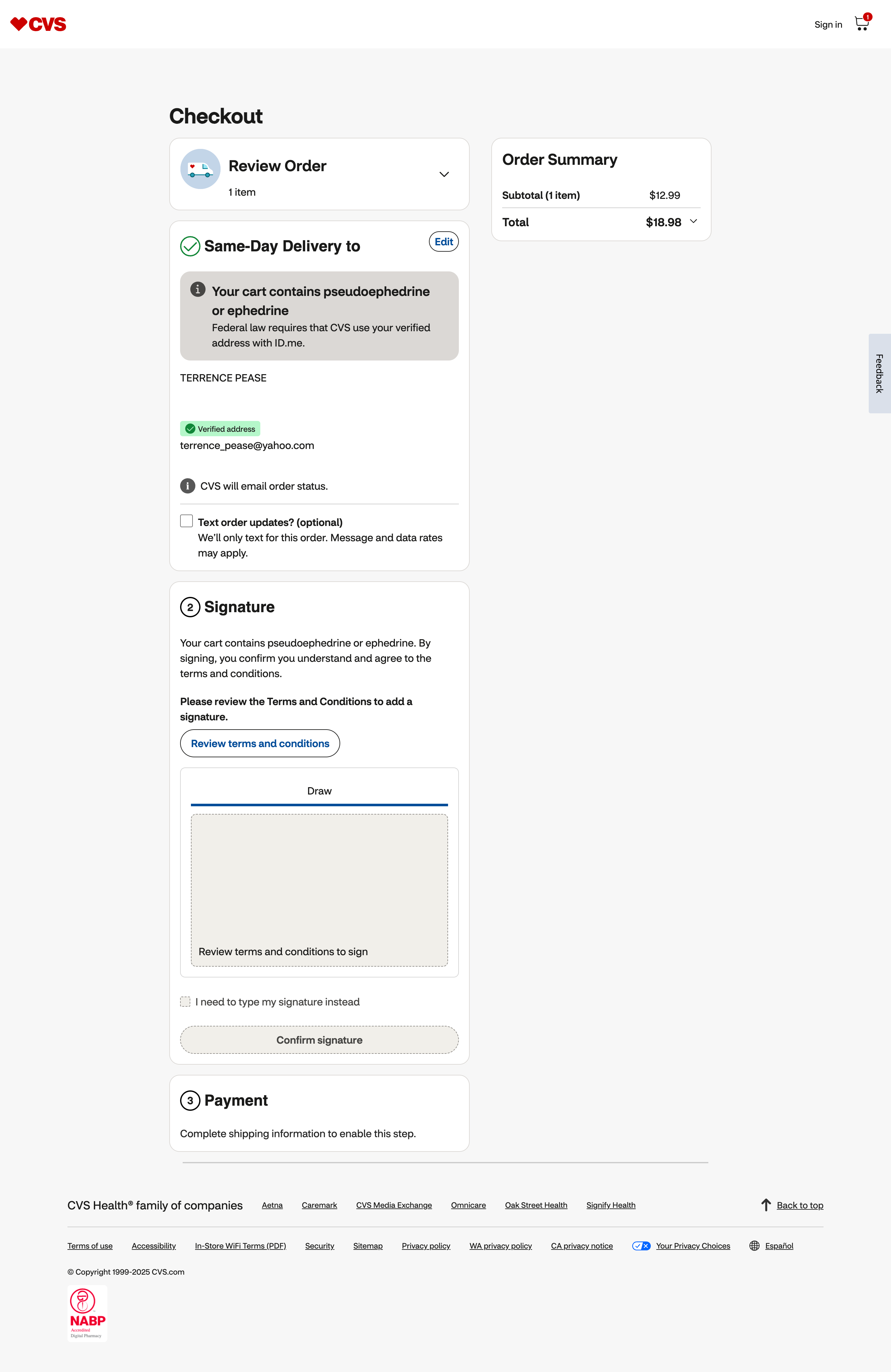
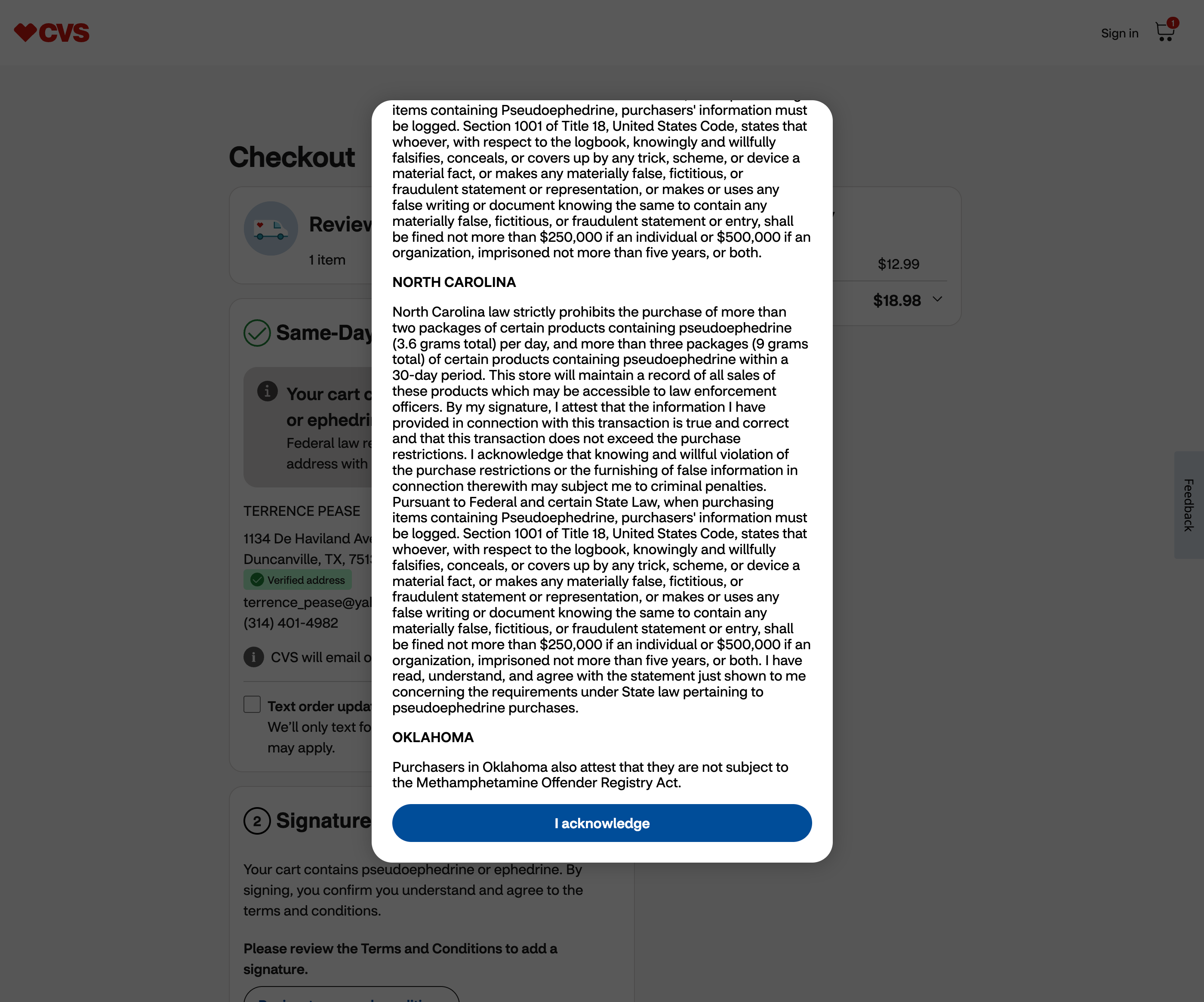
Results
Converted friction into a revenue engine
By moving eligibility validation upfront, we eliminated the abandonment trigger that was preventing customers from completing purchases. Regulated products moved from in-store only to a multi-million dollar digital revenue opportunity, proving that compliance friction, when designed thoughtfully, doesn't prevent conversion. It enables it.
Reduced abandonment through trust
The co-branded verification experience kept customers confident throughout the ID.me handoff. Rather than losing them to uncertainty or abandonment, customers completed verification and continued to purchase.
Reduced compliance and operational risk
Solution passed compliance review while consistently enforcing all requirements. Created a repeatable framework that future teams could leverage, reducing rework and implementation delays.
Accelerated future launches by 20%
Reusable business rules and interaction patterns meant future regulated initiatives could launch faster, without the discovery, alignment, and design burden CVS Health took on for this platform. Every downstream team benefits from solving this problem once, at scale.
Key Learnings
Business constraints are the product problem
The most important decisions were driven by compliance requirements and revenue goals, not interface design. Understanding the constraint (40–60% industry abandonment) became the design insight. Compliance isn't the enemy of conversion, it's the foundation for it.
Early validation prevents the abandonment trigger
Traditional e-commerce lets customers invest effort before discovering ineligibility, the exact friction pattern causing industry-wide abandonment. By validating upfront, we eliminated wasted effort and the moment of disappointment that drives users away.
Trust framework at handoffs prevents abandonment
The critical moment wasn't the design, it was the third-party redirect to ID.me. Customers lose confidence when handed off to an unknown vendor. Maintaining brand presence and clarity through that moment kept them engaged rather than abandoned.
Cross-functional alignment matters
Bringing Legal, Product, and Engineering together early meant we solved the abandonment problem structurally, not just with better UI. Alignment prevented implementation gaps that would have recreated the friction problem downstream.
Reusable systems scale the solution
By building a scalable compliance framework once, future teams could avoid repeating the discovery and alignment work. This means the solution to the abandonment problem compounds. Every future regulated product launch benefits from solving this once.
Design Principles
More projects.




Looking for a product designer?
